
About the Month
Sustainable development is how we must live today if we want a better tomorrow, by meeting present needs without compromising the chances of future generations to meet their needs. The survival of our societies and our shared planet depends on a more sustainable world.
The focus of the campaign has two major prongs enshrined under the SDG’s;
Financial Sustainability.
Environmental Sustainability
Our mission aligns with global development priorities under the Sustainable Development Goals (SDGs), especially SDG 1 (No Poverty), SDG 2 (Zero Hunger), SDG 3 (Good Health & Well‑Being), SDG 8 (Decent Work and Economic Growth), and SDG 17 (Partnerships for the Goals).
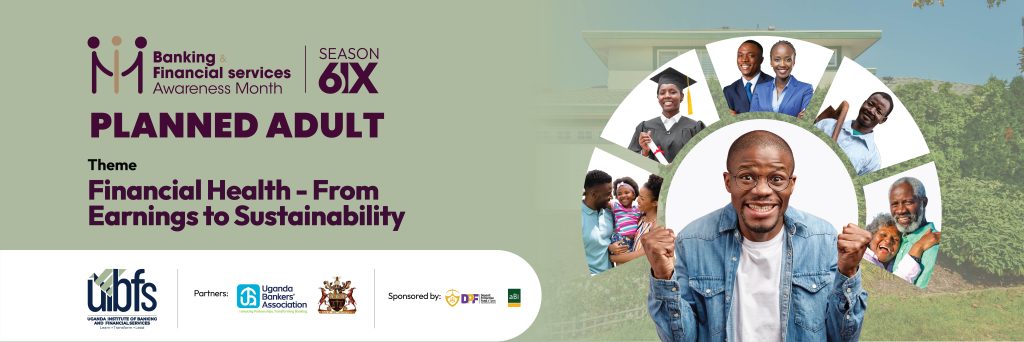
This is all under the campaign theme: “Financial Health: From Earnings to Sustainability”.
Campaign Objectives.
- To sensitize citizens on the importance of financial literacy and the key elements of personal financial management.
- To excite/ stimulate the public to deliberately save for emergencies.
- To educate the community about non-conventional service providers/ services and their use e.g. Fintechs
- To link the public to service providers appropriate to their needs.
- To create dialogue and community involvement in financial services matters.
- To foster partnership and coordination within the banking and financial services industry to explore issues of financial inclusion beyond access.
- Promote career opportunities and professionalism in the banking and financial services industry.
Promote Financial Awareness: Equip participants with the knowledge, skills, and mind-set to make informed financial decisions that promote responsible money management, sustainable consumption, long-term security, and overall financial well-being.
Foster Economic Resilience: Support communities in transitioning from financial vulnerability to long-term financial stability.
Align financial sector actions with the SDGs, the national sustainable finance framework, and showcase their role in driving environmental, social, and governance (ESG) practices
Promote Partnerships for Impact: Engage financial institutions, employers, and policymakers to support inclusive and sustainable financial systems.
OUR FOCUS 2025 – 2026 IS SUSTAINABLE DEVELOPMENT GOALS
It’s a bit of a juggling act. Three different balls must be kept in the air at once: economic growth, social inclusion, and environmental protection. If one or two fall to the ground, the act is over. An economy might grow rapidly, for instance, but only for so long if most people remain poor and all the natural resources are used up.
Where development is sustainable, everyone has access to decent work, quality health care, and education. Natural resource use avoids pollution and permanent losses to the environment. Public policy choices ensure that no one is left behind due to disadvantages or discrimination.
Making the Right Choices Now
If you want to understand why sustainable development is so important in real-world terms, just look around. On average globally, people live longer lives with higher incomes. But a lot of development is unsustainable. It has taken us to climate change. Environmental destruction. Conflict. Poverty and hunger. Vast inequalities and social instability.
Unsustainable development happens when people pursue immediate rewards without thinking about harm to other people or the planet. Often, short-term gains are overshadowed by longer-term costs. That’s the case when someone cuts down an entire forest to turn a quick profit – even if an ecosystem collapses, endangered species die off and local communities are left at permanent risk of devastating floods.
The financial sector has been spotlighted as the critical catalyst for the achievement of sustainable development (SDGs / ESG) because of its critical role in financing businesses. This campaign seeks to create a unified effort to amplify the need for personal, institutional and global sustainability and related financial decisions and mechanisms among industry employees, clients and the public. It seeks to empower participants with knowledge, skills, and practical tools to make informed financial decisions while embracing sustainable behaviors and products. Through this approach, the initiative will promote economic resilience, responsible consumption, and a culture of sustainability.
- Strategic Partners
- Sponsors
- Contact Us
Key Campaign Activities.
| No. | Activity | Description / Purpose | Expected Outcome |
|---|---|---|---|
| 1 | Launching of the Banking & Financial Services Awareness Campaign (BFSAC) | Official launch to popularise the campaign and mark the opening of the campaign period. | Increased visibility, awareness, and stakeholder engagement. |
| 2 | Mobilization and Commitment of Participating Organizations | Engage institutions to support funding, technical guidance, and financial knowledge sharing. | Strong institutional partnerships and shared responsibility. |
| 3 | Customized ESG & Green Finance Training | Equip financial institutions, especially banks, with ESG and green finance knowledge. | Improved ESG adoption and sustainable finance solutions. |
| 4 | Financial Clinics – Staff, Informal Sector & Communities | Deliver financial education on money management and sustainability to last-mile customers. | Increased financial literacy and economic resilience. |
| 5 | Stakeholder Sustainability Forum | Bring together stakeholders to assess progress, lessons learnt, and collective action. | Coordinated sustainability strategies and shared best practices. |
| 6 | Webinars / X Spaces | Online discussions focused on household money management and environmental sustainability. | Wider reach, public engagement, and continuous learning. |
| 7 | Media Awareness Drives | Use media platforms to amplify campaign messages and sustainability awareness. | Nationwide awareness and increased public participation. |